
Dúchas – A Field Day Collection
In his contribution to this Field Day collection, the renowned writer, Amitav Ghosh, reminds us that as the planet hurtles towards environmental and societal breakdown, brought about by the interlinked vectors of global warming, species extinctions and the spread of new pathogens, it is becoming ever more evident that European modernity is founded on a profoundly mistaken understanding of the world.
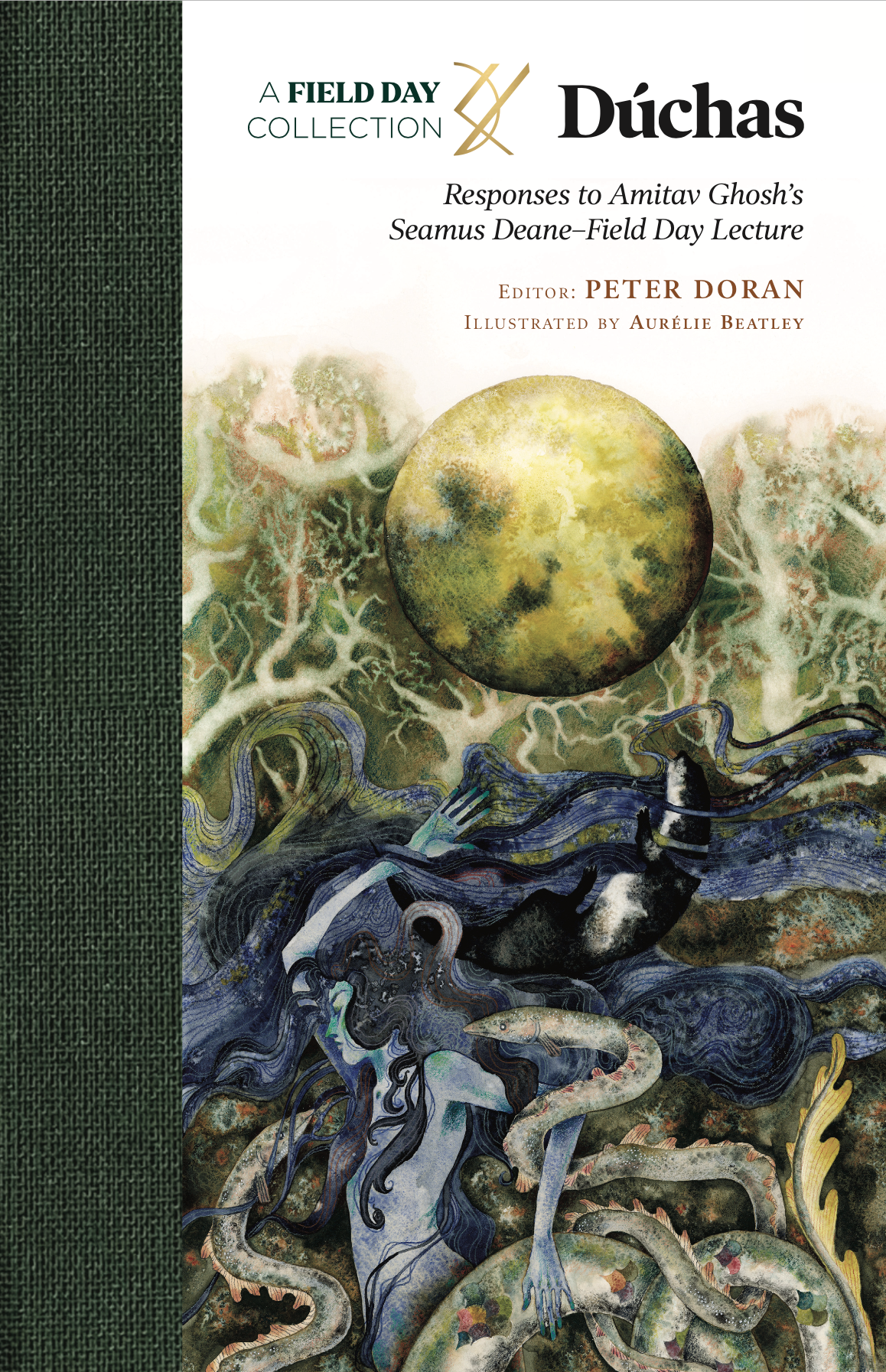
The elevation of humans above all other species, and indeed the Earth itself, has had disastrous consequences for humanity as well as all other living Beings. Ghosh locates campaigns for the rights of Lough Neagh and the Rights of Nature in Ireland as part of a wider counter-movement informed by the island’s mytho-poetic and linguistic heritage. He adds: ‘In Ireland, the land, the loughs and the rivers are re-entering history through a trans-colonial prism of the kind that has been so imaginatively excavated by Field Day. It would come as no surprise to me to see new narratives of liberation and belonging take hold on the island of Ireland, narratives that will extend liberation to the landscapes, to the land of Ireland herself.’
In this inspired collection, Peter Doran has curated a selection of responses to the 2024 Seamus Deane-Field Day Lecture delivered in Derry and Dublin by Amitav Ghosh. The Lecture and the collection self-consciously invoke the spirit of Field Day’s quest to turn that ‘trans-colonial lens’ on our island experience, with a fresh and hopeful recasting of how we might come to understand, recast and respond to the socio-ecological crises of climate change and biodiversity loss.
Through the eyes of some of the island’s most creative thinkers and scholars, the collection is, above all, a contribution to what might be described as an emergent eco-centric literary revival, one that will come to free up the contours of a new island imaginary, a New Republic, an Earth:Republic where the island herself and all of her communion of Beings re-enter our lives as subjects – not objects – of history.
‘Essential reading’
– Bernadette Devlin-McAliskey,
Civil Rights & Rights of Lough Neagh activist, writer
– Mark Garavan,
Atlantic Technological University, Sligo (Ret.) & Feasta
– Prof Mairéad Nic Craith,
Institute for Northern Studies,
University of the Highlands and Islands, Scotland
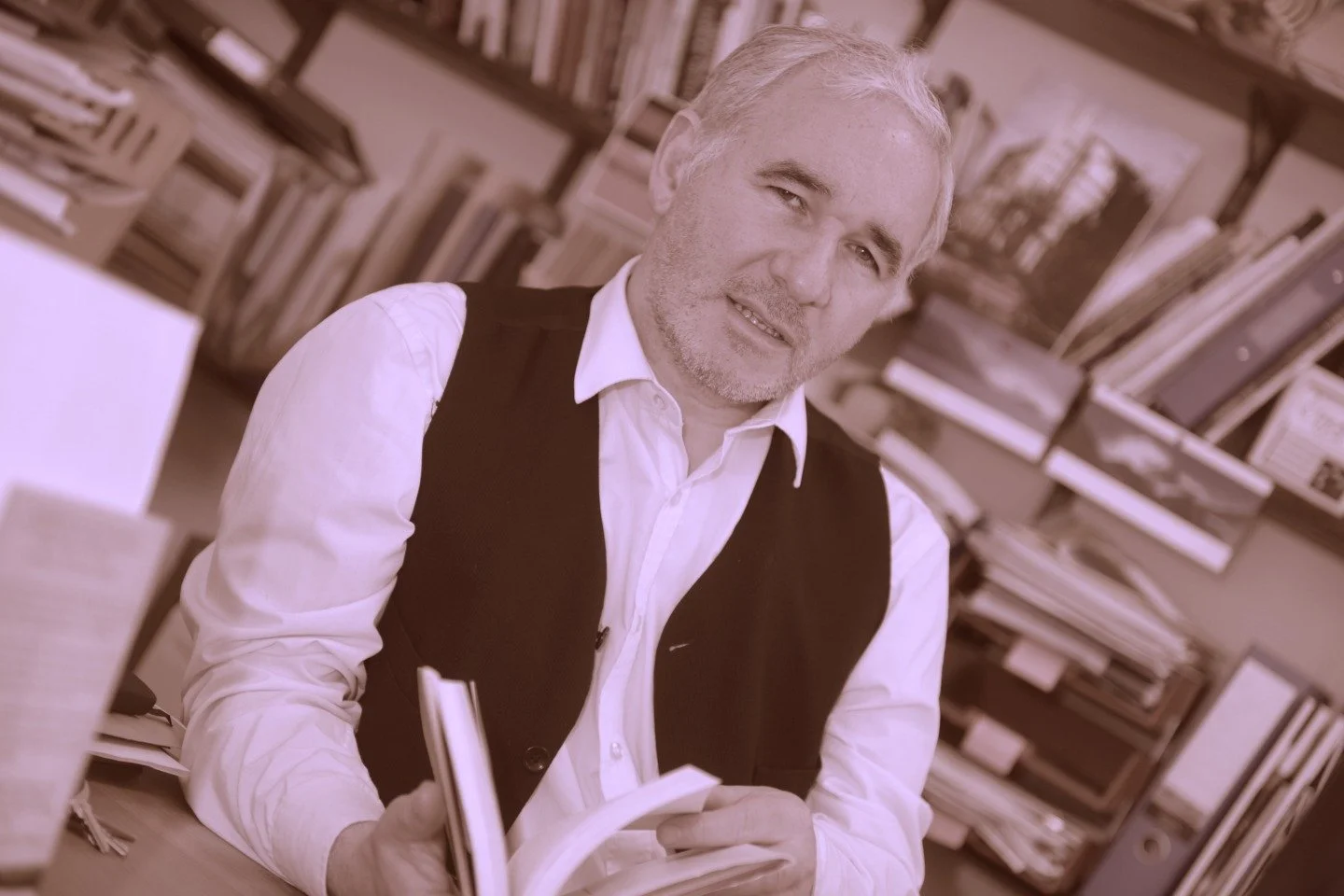
Photo: Editor Dr. Peter Doran
There are intimations that this island of Ireland, her landscapes and the communion of species with whom we belong together, are speaking to us with new clarity. There are signs that Ireland and the more-than-human are re-entering our histories as active subjects, as shapeshifters of possible futures. These intimations are both place-based and resonant with a planetary movement of movements in pursuit of life-affirming practices of resistance and radical care. We are being called to turn away from the monocultures of empire and turn towards a world that can embrace many worlds.
These intimations have the feel of a welcome disruption, akin to a chance encounter with a half-forgotten memory of a beloved, an old friend or an evocative scent. There is an emergent openness to re-enchanted ways of being and belonging to our landscapes and the Earth as we slowly come to terms with the thought that we have been living off expired or expiring stories, stories that were never quite ours to begin with. In her beautiful meditation on the word ‘Kanyini’ – a word from the Australian Aboriginal dialect of Yankunytjatjara – Nuala King writes of a ‘trembling recognition’ that Ireland, too, once spoke a language that held the world as kin: ‘We had our own web of belonging – not only in kinship with one another but with an t-anáil bheo, the living breath of the Earth. But much of that has fallen silent beneath the asphalt of progress and the amnesia of modernity.’ (Chapter 12: XX)